Hidden away in the quiet village of Cadouin, just south of the Dordogne Valley, lies a place where time seems to move differently—the Cloister of Cadouin.
A place of seclusion and devotion
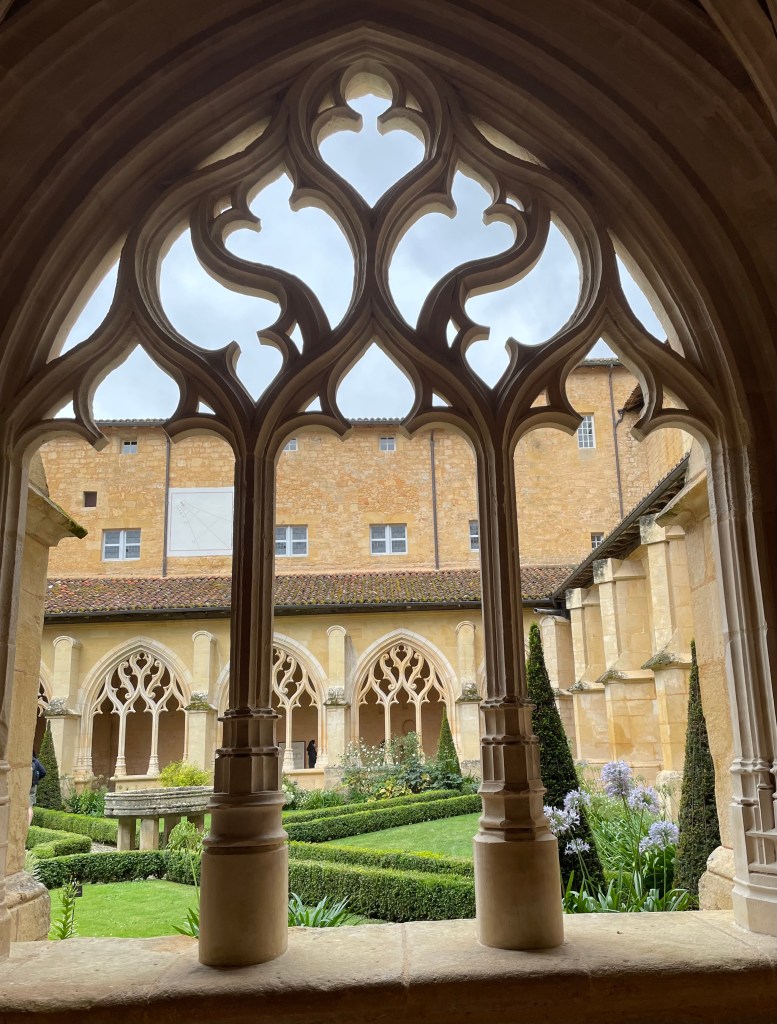
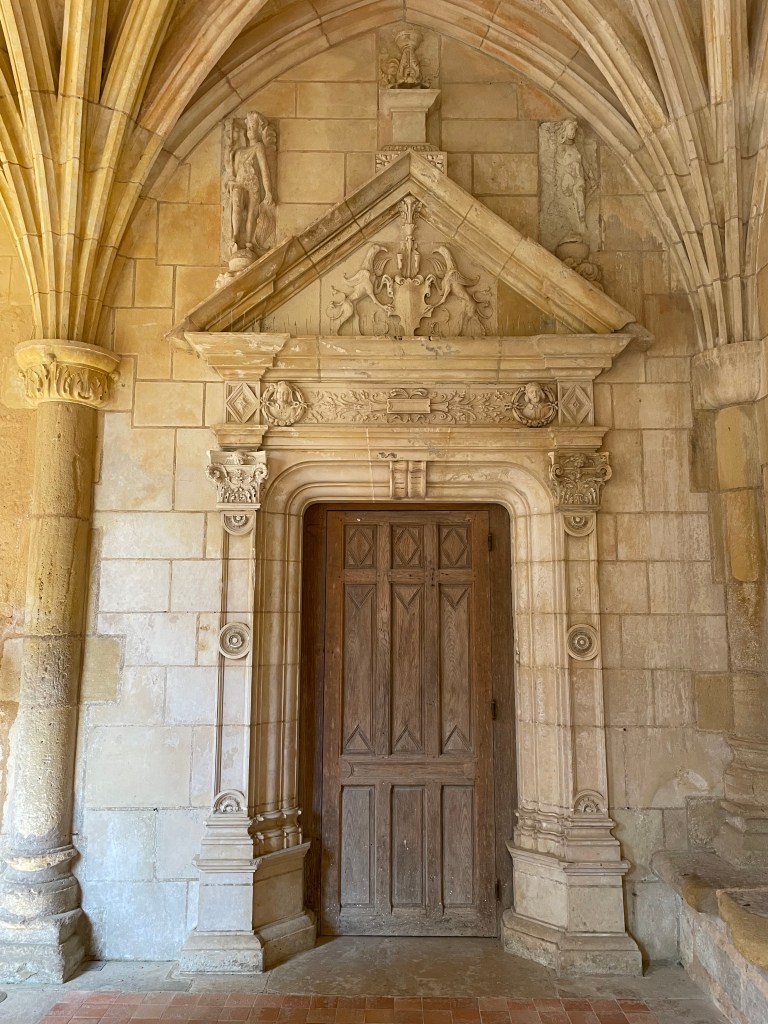
Founded in 1115 by Cistercian monks, the abbey has long been a place of seclusion and devotion. The cloister you walk through today was rebuilt in the late 15th century, a graceful meeting of Flamboyant Gothic arches and the fresh lines of the Renaissance. Every gallery is alive with detail: vines curling in stone as if they might keep growing, strange faces peering out from the walls, animals and symbolic motifs that whisper fragments of forgotten stories.
For centuries, pilgrims came here to venerate the abbey’s “Holy Shroud,” believed to be the burial cloth of Christ. Though it was later revealed to be an 11th-century Muslim textile, the devotion it inspired still lingers in the air, giving the cloister a sense of quiet reverence. There is an exhibition about this in the abbey next door.
UNESCO World Heritage
Today, the Cloister of Cadouin forms part of the UNESCO World Heritage sites along the pilgrimage routes to Santiago de Compostela.
What stays with you most, though, is not the history but the atmosphere. The stone glows golden in the sunlight, shadows shift softly beneath the vaulted galleries, and the central garden feels like the still heart of the abbey. As you walk, each step seems to echo with centuries of silence, inviting you to pause, to breathe, to lose yourself in the calm.

Saint-Avit-Sénieur
Nearby is the small medieval village of Saint-Avit-Sénieur—one of the Dordogne’s most evocative historic sites—a village perched on a ridge, its massive abbey church rising above fields and forests.
Around 1117, a Benedictine abbey was built on the spot, and the church that remains today was once vast and fortified, towering over the countryside. Though now partly in ruins, the abbey church retains its Romanesque grandeur, with soaring walls, thick columns, and fragments of frescoes that hint at its former splendour. The village, with its honey-coloured stone houses, narrow lanes, and views across the Dordogne valley, adds to the sense of timelessness.
It’s advisable to visit these two places in the summer as, in the winter, they can feel a little deserted.
If you would like to read more about places to visit in the Dordogne, you may be interested in reading my book, My Dordogne Life, available on Amazon.
 Janice Croizet Author
Leave a comment